Graduation often feels like a very confusing time. Some students rush to campus placements, others prepare for higher studies, and a few begin searching for a career that allows them to create a meaningful impact on society. Among these choices, the Civil Services Examination conducted by the Union Public Service Commission (UPSC) continues to inspire thousands of graduates every year.
Take the example of Ananya, a recent graduate who had always admired district collectors and IPS officers for the way they transformed communities. She had the passion but no clear roadmap. Like many aspirants, she was overwhelmed by the sheer volume of study material, conflicting advice on social media, and the fear of competition. Her journey reflects the experience of countless graduates who dream of becoming civil servants but struggle to understand where to begin.
The good news is that every successful civil servant once started with the same uncertainty. What separates successful candidates is not extraordinary intelligence but a systematic approach, consistent effort, and the willingness to learn every day. This guide explores how graduates can begin their UPSC journey with confidence and purpose while building a strong foundation for long-term success.
Understanding the UPSC Examination Before Beginning
One of the biggest mistakes beginners make is collecting books before understanding the examination itself. UPSC is designed to assess much more than academic knowledge. It evaluates analytical thinking, decision-making ability, communication skills, awareness of current affairs, ethical reasoning, and administrative aptitude.
The examination consists of three stages:
- Preliminary Examination
- Main Examination
- Personality Test (Interview)
Each stage demands a different strategy. Before purchasing study materials or enrolling in a course, graduates should become familiar with the syllabus, previous years’ question papers, and the overall examination pattern. Understanding what UPSC expects from candidates prevents unnecessary confusion later.
Can You start UPSC preparation immediately after graduation?
Absolutely. In fact, many successful candidates begin their preparation soon after graduation because they can dedicate uninterrupted time to building concepts and developing answer-writing skills. Starting early also gives aspirants enough time to revise multiple times before appearing for the examination.
Build a Strong Foundation with NCERT Books
Every experienced mentor emphasizes one important point, never underestimate the value of basics.
NCERT textbooks from Classes VI to XII remain one of the best resources for developing conceptual clarity. Subjects like History, Geography, Economics, Political Science, and Environmental Studies provide the knowledge base required for advanced preparation.
Instead of trying to memorize everything, aspirants should focus on understanding concepts and connecting them with current events. A strong foundation makes advanced reference books much easier to understand.
Create a Realistic Study Plan
Many graduates begin with unrealistic schedules that last only a few days. Twelve-hour study plans may look impressive on paper, but consistency matters far more than intensity.
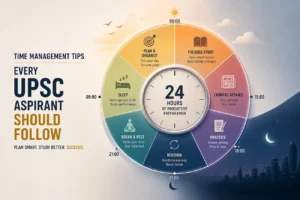
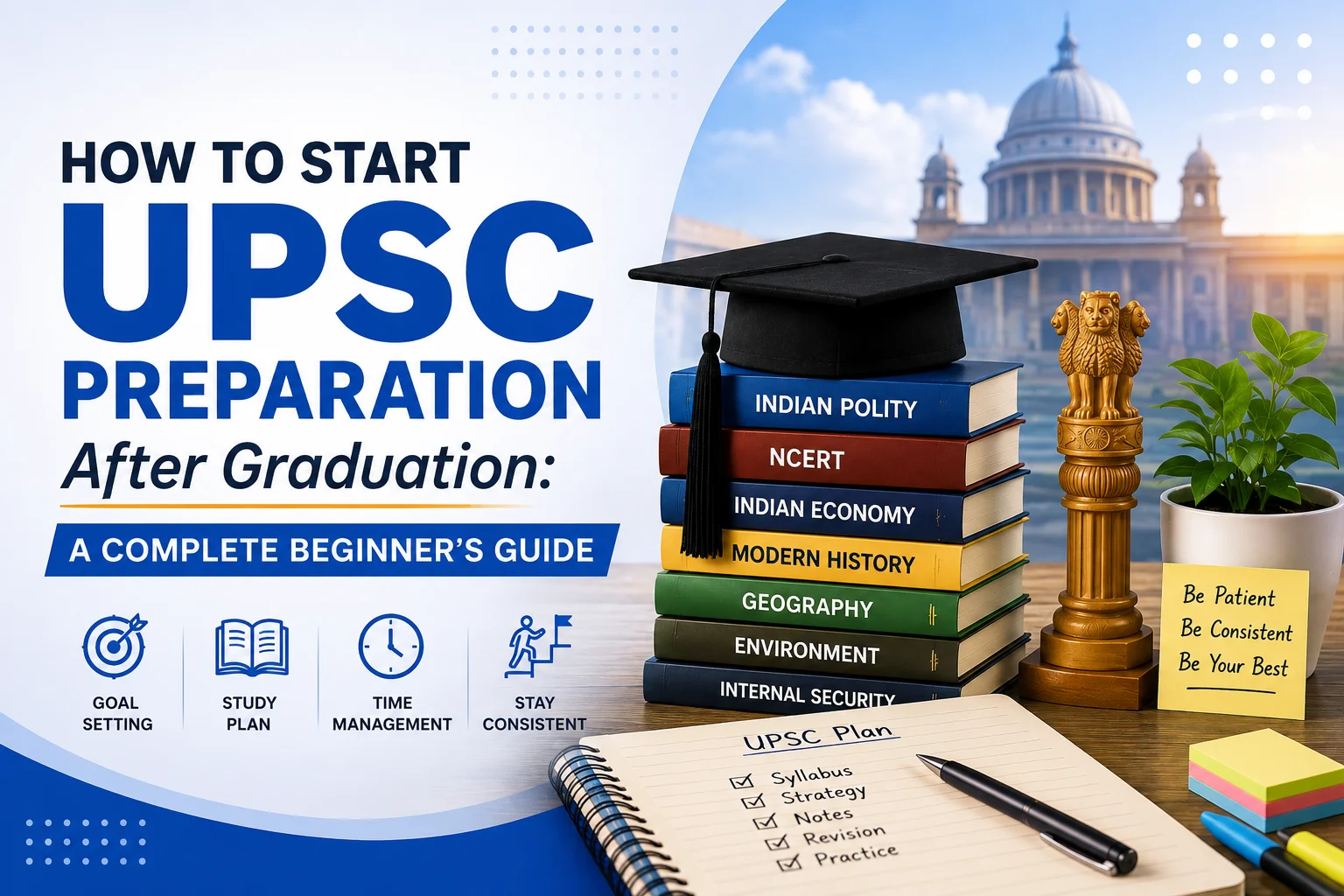
A practical timetable should include dedicated time for:
- Reading core subjects
- Current affairs
- Revision
- Answer writing
- Practice tests
Even six to eight focused study hours every day can produce remarkable results when followed consistently over several months.
The key is not studying harder for a week but studying smarter for an entire year.
How many hours should one study daily for UPSC?
There is no fixed number that guarantees success. Most serious aspirants study between six and eight productive hours a day. What matters more is the quality of learning, regular revision, and maintaining consistency over several months rather than following extremely long study schedules.
Choose Reliable Study Resources
One challenge every beginner faces is information overload.
Book recommendations flood YouTube, Telegram groups, and online forums. Some students end up buying twenty books for one subject, believing that more resources guarantee better preparation.
The opposite is usually true.
Limiting resources and revising them multiple times helps improve retention and conceptual understanding. Standard reference books combined with official government sources and quality newspapers provide sufficient material for effective preparation.
Make Current Affairs a Daily Habit
UPSC is deeply connected to events happening around the world.
Current affairs should never be treated as a separate subject. Instead, they should become part of a daily routine.
Reading a quality newspaper every morning helps aspirants understand governance, economy, international relations, science, technology, and social issues from an analytical perspective rather than simply memorizing facts.
Maintaining concise notes makes revision easier during the examination season.
Which newspaper is best for UPSC preparation?
Most aspirants rely on The Hindu or The Indian Express because of their balanced coverage of national issues, governance, economy, international relations, and editorials. Sticking to one paper is better overtime than trying to read every paper all at once
Learn the Art of Answer Writing Early
Many beginners postpone answer writing until they complete the syllabus.
Unfortunately, this often becomes a major weakness during the Main Examination.
Answer writing is a skill that develops gradually through regular practice. Even if knowledge is strong, presenting ideas clearly within the allotted time requires continuous improvement.
Starting with simple questions and gradually progressing toward full-length answers helps build confidence while improving structure, clarity, and analytical thinking.
Practice Mock Tests Without Fear
Mock tests aren’t there for testing your preparation.
They are there to improve it.
Every incorrect answer highlights an area that needs attention. Every mistake becomes an opportunity to strengthen understanding before the actual examination.
Students who regularly analyze their mistakes often perform better than those who simply collect high scores without understanding their weaknesses.
Treat every mock test as a learning experience rather than a performance evaluation.
When should one start taking mock tests?
Mock tests should ideally begin after completing the basics of the syllabus. Aspirants can initially attempt sectional tests before gradually moving to full-length Prelims and Mains mock tests. Early practice helps identify weaknesses and improves time management.
Develop Consistency Instead of Chasing Motivation
Motivation can inspire someone to begin preparing.
Consistency is what helps them finish.
There will be days when concepts seem difficult, mock test scores decline, or progress feels slow. These moments are natural in every UPSC journey.
Developing disciplined habits, studying at fixed hours, revising regularly, and maintaining a healthy routine creates steady progress even during periods of low motivation.
Small improvements made every day eventually lead to significant achievements.
Find the Right Guidance
Self-study has helped many candidates succeed, but structured mentorship can make preparation more focused and efficient.
Experienced mentors help aspirants understand changing examination trends, improve answer writing, prioritize important topics, and avoid common preparation mistakes.
For many graduates searching for an IAS Academy in Kerala, the goal is not merely finding classroom coaching but discovering an environment that encourages disciplined learning, personalized guidance, regular assessments, and continuous improvement. The right academic support can simplify preparation by providing direction, accountability, and expert feedback throughout the journey.
Is coaching compulsory to crack UPSC?
No. Many candidates have successfully cleared UPSC through self-study. However, coaching or mentorship can provide structured guidance, regular evaluations, expert feedback, and a disciplined learning environment, especially for beginners who are unsure how to approach the syllabus.
Balance Preparation with Personal Well-Being
UPSC preparation is often compared to a marathon rather than a sprint.
Mental well-being plays an equally important role in long-term success.
Regular exercise, adequate sleep, healthy eating habits, and occasional breaks improve concentration and reduce burnout. Aspirants who maintain physical and emotional balance are generally able to sustain consistent preparation for longer periods.
Success in UPSC is not determined solely by the number of hours studied but also by the quality of learning achieved during those hours.
How does one stay motivated during long-term UPSC preparation?
Instead of depending on motivation alone, build habits that keep you moving forward. Setting weekly goals, tracking your progress, revising regularly, discussing topics with peers, and taking short breaks can help maintain momentum throughout the preparation journey.
Believe in the Process
Every UPSC topper once faced uncertainty. Every successful officer started with a blank notebook, unanswered questions, and a dream that seemed distant.
Preparation does not become easier overnight. It becomes manageable through disciplined planning, continuous learning, and unwavering consistency.
Graduation marks the beginning of a new chapter filled with opportunities. Those who approach UPSC with patience, curiosity, and determination gradually transform uncertainty into confidence.
With the right strategy, dependable mentorship, and a commitment to steady improvement, the journey toward the Civil Services Examination becomes less intimidating and far more rewarding. Every chapter studied, every answer written, and every lesson learned brings an aspirant one step closer to serving the nation with integrity and purpose.